

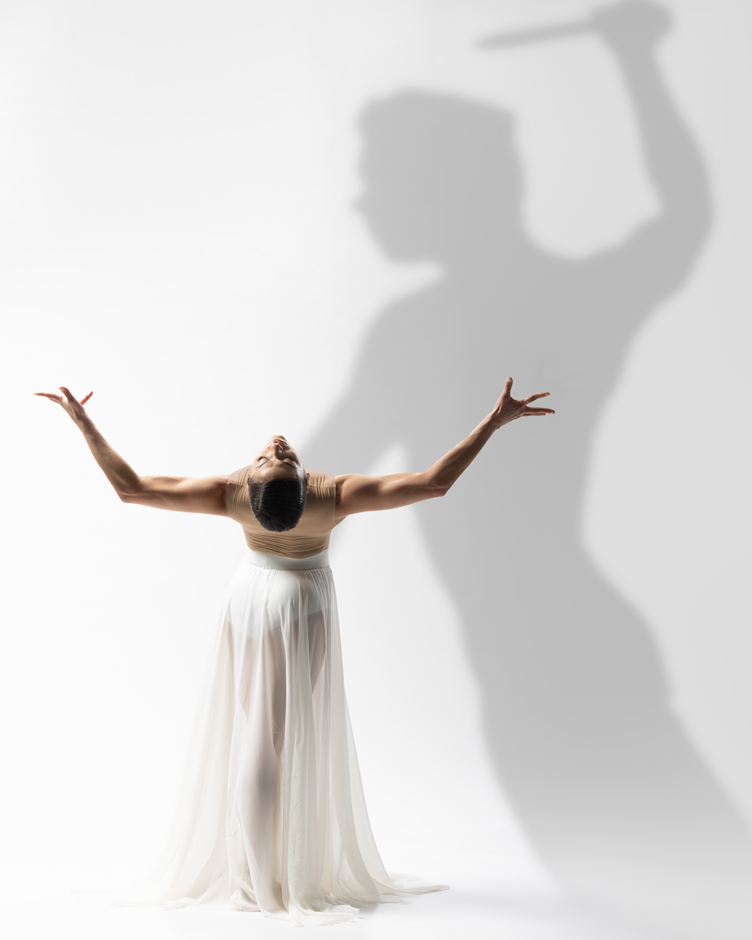
An innovative and unexpected take on Bizet’s famous opera.
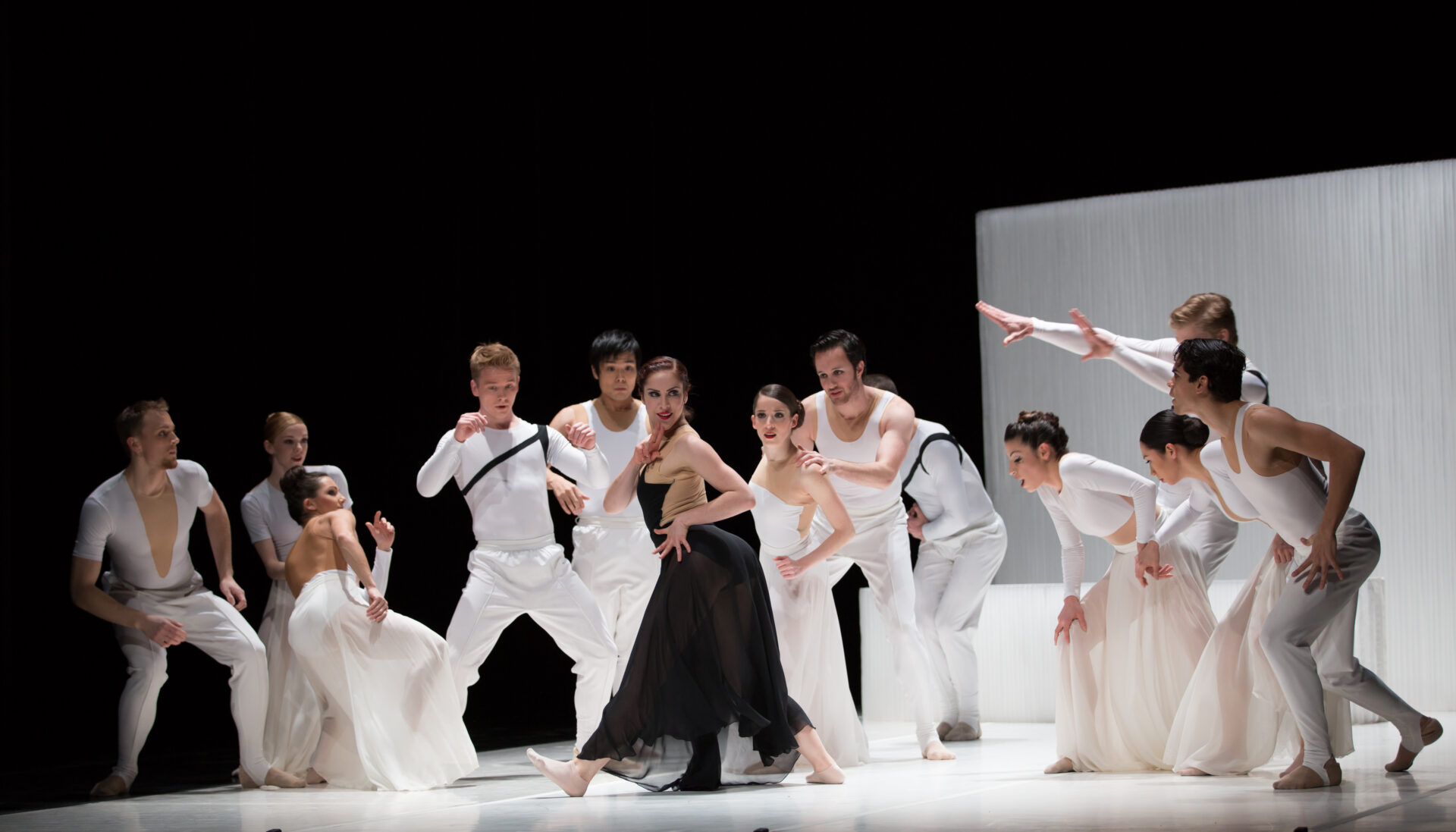
A story that burns with passion, danger, and desire.


Carmen is one of the most unforgettable characters in all of storytelling.

Show Details
Run Time Approximately 1 hour 28 minutes
This ballet is a full length. Meaning, one ballet with intermissions, similar to a book with chapters.
Act I: 46 Minutes | Intermission: 20 Minutes | Act II: 22 Minutes
Choreography Gustavo Ramirez Sansano
Gustavo Ramírez Sansano, born in 1978 in San Fulgencio, Spain, was Artistic Director of Luna Negra Dance Theater from 2009 until 2013, and now combines his work as a freelance choreographer with Proyecto Titoyaya, the Spanish dance company he founded in 2006 with Veronica Garcia Moscardo.
Sansano has been the recipient of numerous awards for his choreography, including first prize at the 1997 Ricard Moragas Competition in Barcelona, 2001 Prix Dom Perignon Choreographic Competition in Hamburg, Germany, and Valencia performing arts awards for best dance show and choreographer in 2005 and 2019. Sansano was chosen by the magazine Por la Danza for its 15th anniversary issue, as one of the “Fifteen Choreographers to Watch”. Dance Magazine featured Gustavo Ramírez Sansano, then Artistic Director for Luna Negra, as “25 to Watch” in 2011, he was named a “Chicagoan of the Year in Arts & Entertainment” by the Chicago Tribune in 2012, and in June 2017 was chosen by the Associación Professionals Dansa de la Comunidad Valenciana (APDCV) for its 30th anniversary as “Outstanding Valencian Choreographer”.
He has been commissioned to create works for Alvin Ailey, Nederlands Dans Theater, Compañía Nacional de Danza, Hubbard Street Dance Chicago, Luzerner tanz Theater, Ballet BC, Atlanta Ballet, and Ballet Hispánico. As a dancer, Sansano was part of prestigious companies such as Víctor Ullate Ballet – Comunidad de Madrid, Nederlands Dans Theater II, and Hubbard Street Dance Chicago. He also performed original works by Jacopo Godani, Hans van Manen, Jiří Kylián, Ohad Naharin, Johan Inger, Paul Lightfoot, and Victor Ullate. Sansano has worked with Luis Crespo and also collaborated with other artists including David Delfin, Angel Sanchez, Nicolas Fischtel, Bregje van Balen, Branimira Ivanova, and Gelson Amaran. Sansano has been invited to teach and choreograph numerous schools, universities, and companies including Centro Coreográfico Galego, Scottish Dance Theatre, Conservatorio Superior de Danza de Valencia, Springboard Danse Montréal, The Juilliard School, Escuela Municipal de Música y Danza de Torrevieja, Institut del Teatre de Barcelona, DAF Dance Arts Faculty, California Institute of the Arts, Butler University, Escuela Moderna de Música y Danza, Ballet de Santiago, Copenhagen Contemporary Dance School, and The School at Jacob’s Pillow.
Music Georges Bizet
Born into a musical family in 1838, Georges Bizet inherited his parents’ talents, learning to read and write music by age four. Georges had the huge honor of being admitted into the Paris Conservatoire de Musique at nine years old. Bizet continued to awe people when he wrote his first symphony at the age of seventeen for a class assignment at the conservatory. As a city known for high fashion, fine food, and culture, Paris was the perfect place for a young composer because it attracted talented musicians and eager audiences.
As a young man, Bizet worked at the Opéra Comique, where he learned about the backstage, sets, lights, performers, and musicians. However, when the curtain went up for the premier of Carmen, people were shocked and dismayed by the dramatic and risqué story. In fact, Carmen did not gain popularity until after Bizet’s early death at age thirty-seven in 1875. Even though Carmen is now considered a classic in opera repertoire, Georges Bizet died thinking his work was a complete disaster.
Digital Tickets
See below for quick answers to common questions regarding the BalletMet Digital Ticket Wallet!
The Columbus Dispatch
“Can a ballet with spare scenery and no-frills costumes pack an emotional punch? On Friday night, the dancers of BalletMet Columbus answered with a resounding yes.”
Behind the Curtain


The Story Behind the Ballet
Taking its cues from the 1845 novella by Prosper Merimee and the 1875 operaby Georges Bizet, Carmen.maquia weaves the drama filled story of Carmen, a spirited gypsy, and her love triangle with the doting Don Jose, an army officer, and Escamillo, a beloved bullfighter. Spanish choreographer Gustavo Ramirez Sansano choreographed Carmen.maquia in 2012 on Chicago company Luna Negra Dance Theater.
The title is derived from tauromaquia, Spanish for “the art of bullfighting.” Pablo Picasso often compared Carmen to an untamable bull, so Sansano removed “tauro” and inserted “Carmen.”
In his version, Sansano reimagines Carmen in a Picasso-inspired setting, with a white, canvas-like set and sculptural costumes made to evoke the inside of traditional flamenco attire. Bizet’s score remains the soundtrack, though in the form of various orchestral versions with no vocals.
Davidson Theatre
Get DirectionsMake A Night Of It With Entertainment Before And After The Show.
FAQ
Where do I park?
There are parking garages near the Ohio and the Capitol theatres, as well as limited metered street parking (most of which is free after 6 pm and on Sundays).
Ohio Statehouse Parking Garage
Enter from westbound Broad Street or Third Street.
Riffe Center Parking Garage
Enter from Front Street. Take the elevators to the third floor and proceed along the hall to the Davidson Theatre. (For the Box Office or Will Call, descend the escalators to the first floor.)
Downtown traffic can be heavy, so please plan ahead. We recommend arriving 20-30 minutes early to park, find your seat, explore the program and relax before the performance. Audience members who arrive late may not be seated until intermission.
What do I wear?
This is our most-asked question, and the answer is: You probably won’t feel out of place no matter what you wear. If you want to wear jeans, go for it—we promise you won’t be alone. If you want to dress up, feel free. Many others do, too. We don’t see as much formal-wear in the theater as we once did, though it wouldn’t be unusual to see a tux or a gown at a performance. Basically, anything goes.
Do the dancers talk?
No, dancers express the story or meaning through the movement. In some story ballets, dancers will use pantomime (exaggerated movements) to help you understand what’s happening. If you see a ballet with pantomime, head to the lobby, where we’ll have more information and guidance. If you ever struggle to follow along, feel free to chat with a BalletMet staff member in the lobby who will happily answer any questions you have.
When do I clap?
If you are wowed by something you just saw, please do applaud. At BalletMet, we love to hear clapping. It’s uplifting to those performing, as they can often feel your excitement and energy on stage. So applaud whenever you see fit! Note: Not every ballet company feels this way, so keep that in mind if you happen to be at another company’s performance.
Images by Jennifer Zmuda