

The Story of La Bohème
La Bohème, one of Giacomo Puccini’s most beloved operas, is a timeless story of love, loss, and the fleeting beauty of youth. Set in the Latin Quarter of 1830s Paris, the opera follows a group of young bohemians—artists, poets, and dreamers—struggling to live, love, and create amid poverty and cold.
Meet the Full Cast of Characters:
- Rodolfo – A poet and hopeless romantic, Mimì’s neighbor and love interest.
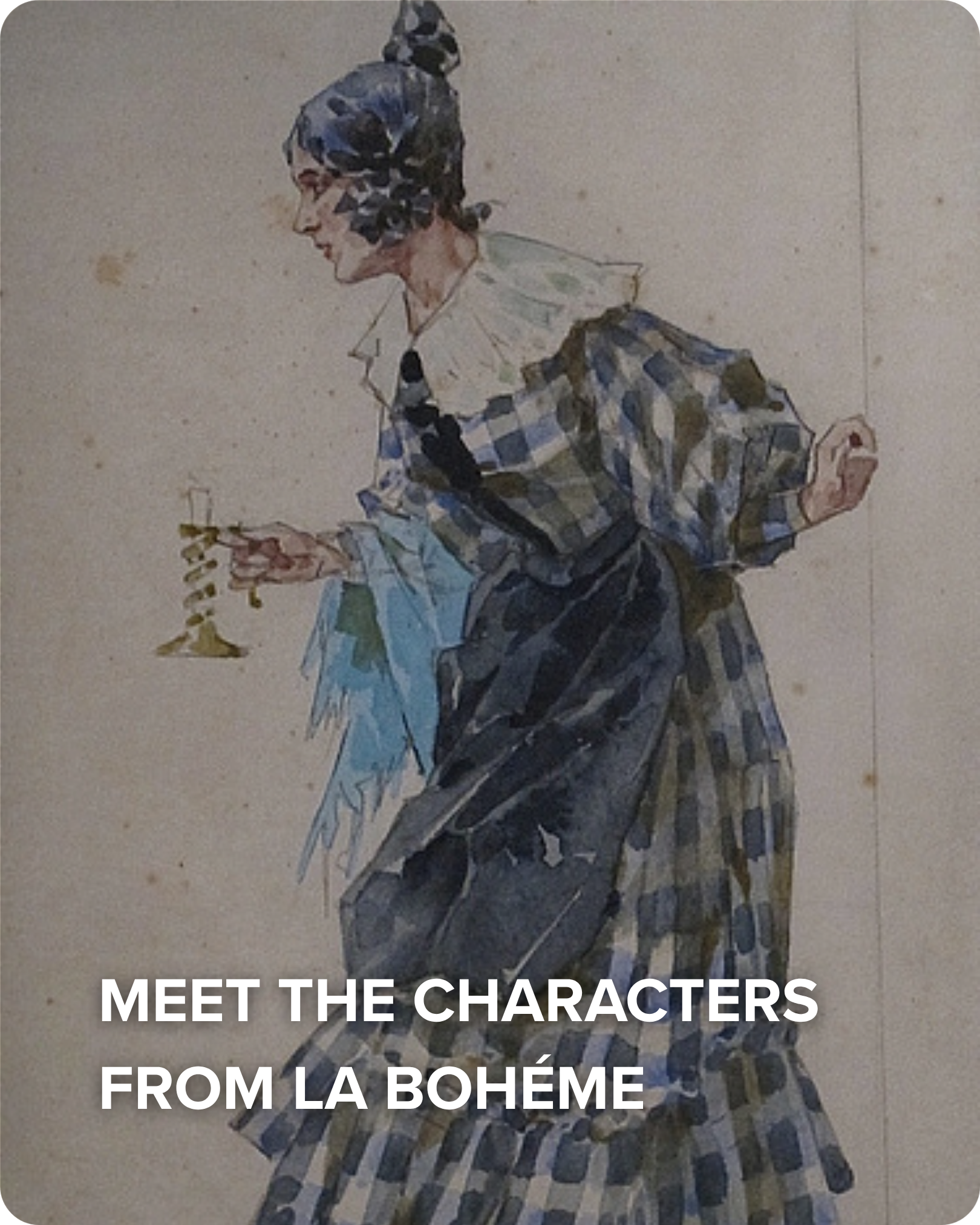
- Mimì – A quiet and kind hearted seamstress, Rodolfo’s neighbor and love interest.
- Marcello – A painter and roommate of Rodolfo, still hung up on his ex-girlfriend.
- Musetta – A singer and flirtatious it-girl, Marcello’s ex-girlfriend.
- Colline – A philosopher and roommate of Rodolfo, has fabulous taste in outerwear.
- Schaunard – A musician and roommate of Rodolfo, provides wine and food to the group.
- Benoît – An eccentric and mischievious man, landlord of the four Bohemians.
- Alcindoro – A wealthy and gullible older gentleman, Musetta’s current fling.
Act I
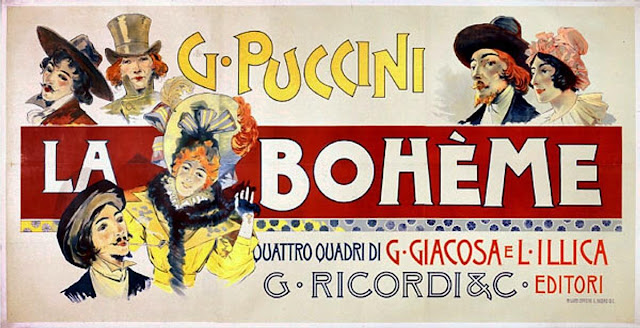
The opera opens in a drafty attic of an apartment in Paris’ Latin Quarter on Christmas Eve, where poet Rodolfo and painter Marcello are trying to stay warm by burning Rodolfo’s latest manuscript. Soon, their two other roommates—philosopher Colline and musician Schaunard—arrive, bringing food and wine. However, the group decides to save the food and wine for the days ahead and instead go to the Latin Quarter for Christmas dinner. Before they can leave, they’re interrupted by their landlord Benoît who comes to collect the rent. Soon the group comes up with a scheme to get Benoît drunk and get him to tell the group about his marital infidelity. The group throws Benoît out.
As the others go out to celebrate, Rodolfo stays behind to finish writing. There’s a knock at the door—it’s Mimì, a delicate seamstress from the apartment next door, asking for Rodolfo to relight her candle. She nearly faints, and Rodolfo helps her, their hands touching. In the candlelight, they instantly become infatuated with each other. The act ends with the iconic duet “O soave fanciulla” (“Oh lovely girl”) as Rodolfo and Mimì leave together for the café.
Act II
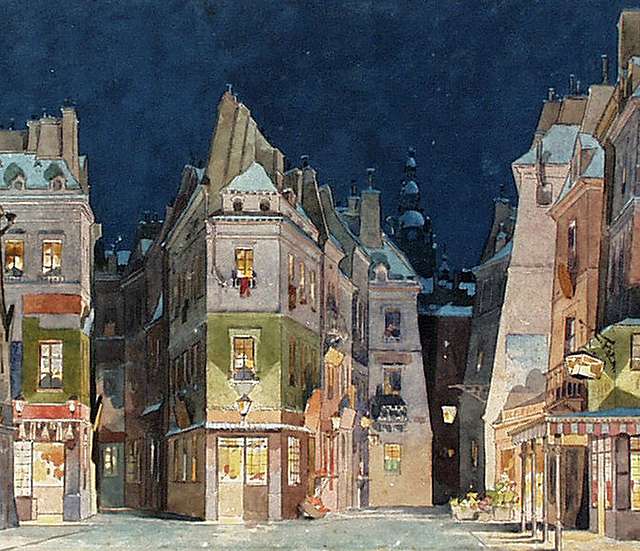
The scene shifts to a bustling Parisian street on Christmas Eve. The roommates and friends arrive at a cafe to order dinner. As the group dines, Marcello’s former sweetheart, Musetta, enters with a dramtic flair. She is on the arm of a wealthy admirer, Alcindoro, whom she uses to make make Marcello jealous.
Musetta causes a scene with her flirtatious aria “Quando me’n vo” (“When I go along”), and it works—Marcello gives in to his feelings for her. She ditches Alcindoro and joins the bohemians as they slip away into the night, leaving Alcindoro with the bill.
Act III
Weeks have gone by, and in the icy outskirts of Paris, Mimì searches for Marcello, now living with Musetta at a tavern. Mimì confides to Marcello that Rodolfo’s jealousy and mood swings are becoming worrisome. As Marcello comforts Mimì, Rodolfo arrives so she hides to listen in on the ensuring conversation.
Rodolfo is pressed by Marcello to reveal his true reason for coming and confesses his true fear—he’s too poor to care for Mimì and he is concerned that their living conditions are causing her illness to worsen.

Overhearing this, Mimì and Rodolfo share a bittersweet reconciliation, deciding to stay together until spring. Meanwhile, Musetta and Marcello quarrel once again, their tumultuous relationship spiraling into another breakup.
Act IV
Rodolfo and Mimì have separated now that spring has come. Back in the attic, Rodolfo and Marcello try to distract themselves with work, but both are heartsick. Schaunard and Colline arrive with meager food, but the mood is interrupted when Musetta bursts in—Mimì is outside but is too weak to come upstairs. Rodolfo runs to aid her and Musetta shares with the rest of the group that Mimì requested that she be taken to Rodolfo to die.
The friends make Mimì feel comfortable and then leave to help: Musetta sells her earrings for medicine, and Colline says goodbye to his cherished overcoat in the moving aria “Vecchia zimarra”. Now alone, Rodolfo and Mimì reminisce about their relationship, but Mimì is overcome with violent coughing. The others return and Mimì drifts off to sleep. Moments later, they realize Mimì is dead, and Rodolfo weeps by her side.
La Bohème has resonated with audiences for over 100 years because it captures the raw emotional highs and lows of real life—joy, jealousy, passion, and loss—all wrapped in Puccini’s lush, lyrical score. Whether you’re a seasoned opera lover or new to this story, La Bohème offers a deeply human story that still speaks to modern hearts.
Explore More:
 |
 |